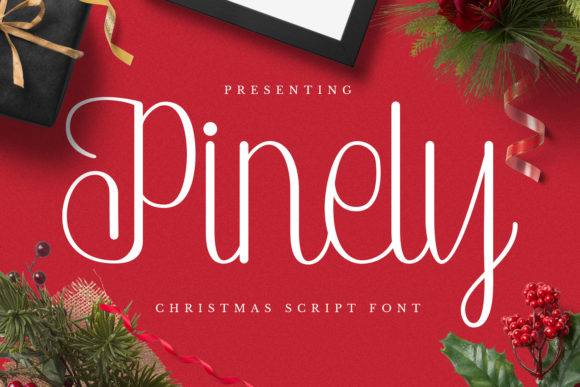
Pinely: A Flowing Handwritten Font for Elegant Branding Projects
Pinely in Logo Design: A Designer’s First Impressions
I opened a new logo concept for a local artisan bakery last week and reached for Pinely without hesitation. As a script handwritten font, Pinely carries a soft elegance that’s hard to find in digital typefaces. The first test was a simple wordmark using the bakery’s name. The result? Immediately charming. The font’s natural flow and slight texture gave the logo a personal, hand-crafted feel that aligned perfectly with the brand’s values. Compared to other fonts I’ve used in the past, Pinely stood out for its balance between legibility and character. It’s not overly decorative, which makes it ideal for brands that want to feel approachable yet refined.
Using Pinely for Packaging Design: Texture and Personality
Next, I dropped the same logo into a packaging mockup for custom cookie boxes. This is where Pinely really began to shine. On a kraft paper label, the font’s subtle strokes and organic rhythm added a sense of warmth and authenticity. It’s the kind of handwritten font that feels intentional without screaming “look at me.” For small batch products, handmade shops, or boutique brands, this is a powerful visual cue. I tested it in both black and a muted gold foil finish—each time, Pinely held its own. The font’s natural variation in line weight gives it a dynamic presence, especially when printed at a larger size on product packaging or gift tags.
Pinely on Web and Social Media: Readability and Style
While Pinely works beautifully in print mockups, I wanted to see how it performed in digital spaces. I placed it in a hero section of a brand website and on a few Instagram story templates. On screen, the font retains its elegance, but I noticed it’s best used at larger sizes. At 24px or below, some of the fine details begin to blur, especially on mobile screens. That said, as a display font for headlines, quotes, or social media highlights, Pinely adds a distinctive personality that’s hard to match. I found it especially effective for lifestyle brands, wellness spaces, and creative studios looking to inject a bit of humanity into their online presence.
Font Pairing with Pinely: Finding the Right Balance
One of the most important aspects of using a script handwritten font like Pinely is knowing how to pair it with supporting typefaces. I tested several combinations, and found that a clean sans serif like Lato or Montserrat provides a perfect counterbalance. The contrast between Pinely’s organic flow and a modern sans serif creates a visual rhythm that guides the eye naturally through a layout. For more editorial-style designs, I paired it with a serif font like Playfair Display, which enhanced the timeless quality of the overall design. Pinely is best used as a headline or accent font—avoid using it for long body text or small captions.
Pinely in Print: Business Cards, Posters, and More
Testing Pinely in print-based projects like business cards and event posters reinforced its versatility. On a minimalist business card with a single color print, the font’s curves gave the design a softness that offset the starkness of white space. For a poster design promoting a local art show, I used Pinely for the event title in combination with a bold sans serif for the date and location. The result was visually engaging and clearly hierarchical. That said, if you’re working with a project that requires tight spacing or small print, Pinely may not be the best fit. Its natural flow can cause letters to feel crowded at smaller sizes or in all-caps settings.
Final Notes on Using Pinely for Branding Projects
Overall, Pinely is a flowing handwritten font with a distinct personality that makes it a valuable addition to any brand designer’s toolkit. It’s best suited for projects that benefit from a human touch—think logos, packaging, social media graphics, and editorial headers. It performs well in both print and digital formats, as long as it’s used thoughtfully and at the right scale. Before using Pinely in a client project, always test it across multiple applications and check licensing to ensure it’s cleared for commercial use. If you’re looking for a font that brings warmth, elegance, and a touch of timelessness to your work, Pinely is definitely worth exploring.